
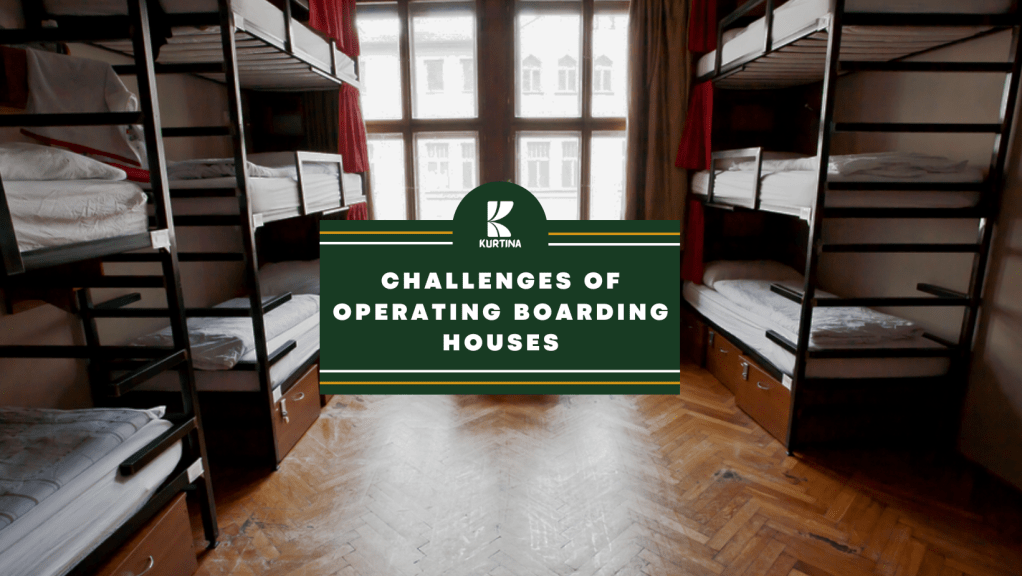
Similar to any business endeavor, operating a boarding house presents its unique set of obstacles and avenues for growth.
Here are some primary challenges and potential avenues for advancement:
Elevated Operational Expenses
Running a boarding house can incur significant costs, especially in urban locales characterized by soaring real estate prices.
Operating expenditures encompass rent or mortgage payments, property upkeep, utility bills, property levies, insurance, and staff salaries.
Market Saturation
In certain regions, the boarding house sector might be oversaturated, leading to stiff competition among numerous boarding establishments.
This saturation can complicate tenant acquisition and retention, necessitating innovative marketing and promotional tactics.
Tenant and Neighbour Concerns
Boarding house proprietors may encounter grievances from tenants or neighboring residents regarding noise disturbances, safety issues, or other matters.
Promptly addressing these concerns and implementing effective conflict resolution procedures is crucial.
Innovative Strategies
To thrive amidst intense market competition, boarding house operators may need to embrace innovation.
This could entail introducing novel amenities or services like fitness facilities or catering options, or leveraging technology to streamline operations and enhance tenant engagement.
In summary, the boarding house sector presents both challenges and prospects for growth.
Identifying and addressing these factors demands a methodical approach, with the outlined strategies serving as a concise roadmap for prospective investors or property owners interested in exploring this business avenue.
By remaining cognizant of these dynamics and adapting to evolving market conditions, boarding house proprietors can establish lucrative and sustainable enterprises.
 KURTINA PH
Leave a comment